Brokers
Vantage Copy Trading: A Month of Following 3 Strategies, Honestly Scored
Some links on this page are affiliate links. We may earn a commission if you sign up through them, at no extra cost to you.
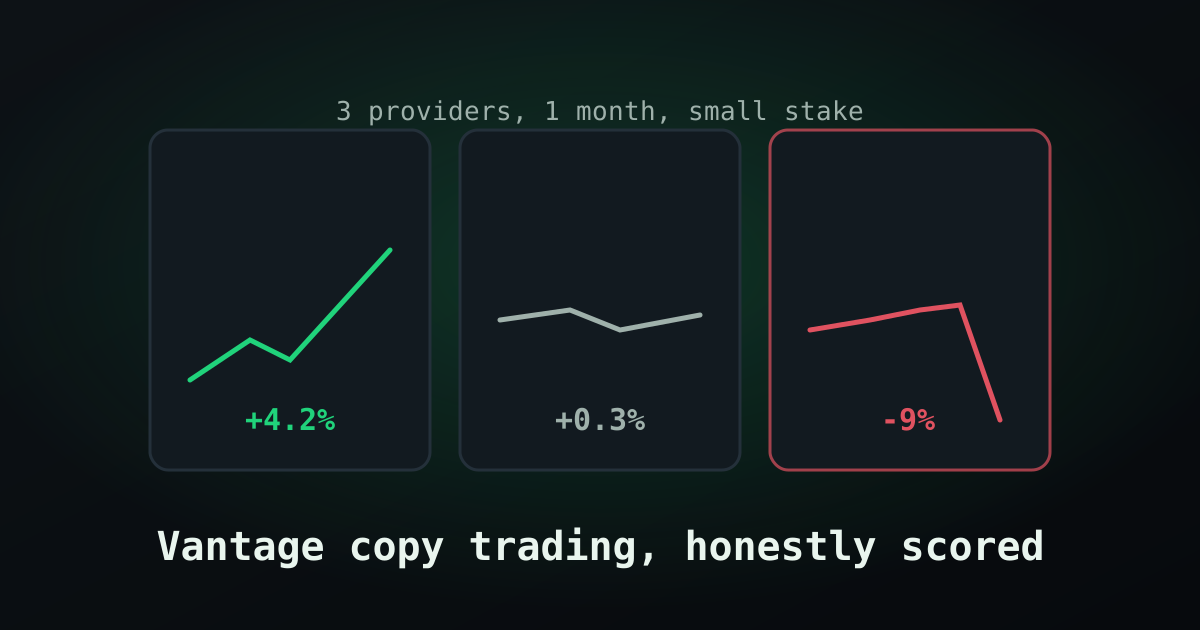
I'm a build-your-own-system guy, so copy trading always smelled like ordering someone else's lottery ticket. But enough readers asked about Vantage's copy feature that I put a small stake behind three providers for a month instead of opining from the couch. One finished up a few percent, one went nowhere, and one taught me a lesson about martingale that cost me about 9%.
That spread of outcomes IS the review, basically. But let's do the details.
How it actually works
- You need a funded Vantage account, then you browse strategy providers in the app and allocate an amount to copy.
- Trades mirror proportionally to your allocation. You can stop copying or close positions yourself at any time — you keep control of the account.
- Providers charge a profit share (commonly 20–40%, set per provider, shown on their profile) on gains, typically settled on a high-water-mark basis.
- Your normal trading costs still apply underneath — spreads/commission on the account type you copy from.
Setup took me minutes and mirroring worked as advertised, including during a CPI release. No complaints about the plumbing.
Why the leaderboard misleads (and how to read it instead)
Every copy platform sorts by recent returns, Vantage included. Picking a provider by last month's return is hiring a roofer because he finished fast — the question was whether the roof holds water. The leaderboard shows speed. You need to check the roof:
- 1Max drawdown first, returns second. My -9% provider showed 40%+ monthly gains — classic martingale curve: smooth stairs up, elevator down. A real edge has ugly weeks visible in the history.
- 2Track record length. Three months of history is a coin on a hot streak. I'd want 12+ months, through at least one nasty market week.
- 3Open-trade behaviour. Providers hiding big floating losses while banking tiny wins are cooking the stats. The equity curve vs balance curve gap exposes it.
- 4Position sizing. If lot sizes grow after losses, run. That's the whole martingale tell, and it's disturbingly common in the top 20.
Sponsored
Try it with guardrails
If you test Vantage copy trading, do it my way: small allocation, one provider with 12+ months of boring history, and a hard personal stop at -10%. The app makes starting easy — the discipline is your job.
Explore Vantage copy tradingWho this is for (and who should skip it)
Fair use case: you have capital, no time or desire to trade actively, and you treat it like allocating to a fund manager you must vet yourself — with the failure rates of an unregulated fund manager pool. Diversify across 2–3 conservative providers, cap the total at money you can lose, check in weekly.
Skip it if you're trying to LEARN trading. Watching mirrored trades teaches you as much about trading as watching someone else's Uber teaches you the city. And if you already have an edge of your own, your money compounds better behind your own system or a funded eval than behind a stranger's.
Would I keep a copy allocation running? A small one, on the one provider that bored me all month, yes. The other two were tuition. As always with anything broker-side: verify the current fee structure in the app before allocating — profit shares are set per provider and change.
Frequently asked questions
Does Vantage have copy trading?
Yes — through the Vantage app you can browse strategy providers, allocate an amount and mirror their trades automatically, while keeping full control to stop copying or close positions yourself.
What does Vantage copy trading cost?
Providers charge a profit share on gains (commonly in the 20–40% range, shown on each profile), and normal spreads/commissions apply on the underlying trades. There's no separate platform subscription.
Can you lose money copy trading on Vantage?
Absolutely — you carry the provider's full downside. Judge providers by maximum drawdown and track-record length rather than recent returns, and size the allocation like money you can afford to lose.
Is copy trading better than a prop firm evaluation?
Different tools: copy trading puts your capital behind someone else's decisions; an eval puts a firm's capital behind yours. If you want to become a trader, evals build skill. If you want passive exposure, copy trading fits — with fund-picking discipline.
Keep reading
Risk note