Brokers
Vantage Review From a Prop Trader Who Also Trades His Own Money
Some links on this page are affiliate links. We may earn a commission if you sign up through them, at no extra cost to you.
Most of my trading runs through prop firm evals — that's the whole point of this site. But I keep a personal account at a broker too, because some things you simply can't do under prop rules: hold through the weekend, trade every news candle, or withdraw without a payout committee's blessing. Vantage is one of the brokers I've kept coming back to, so here's the review I'd want before opening an account.
The account types, minus the brochure talk
| Account | Spread | Commission | Who it's for |
|---|---|---|---|
| Standard STP | from ~1.0 pip | none | casual size, simple math |
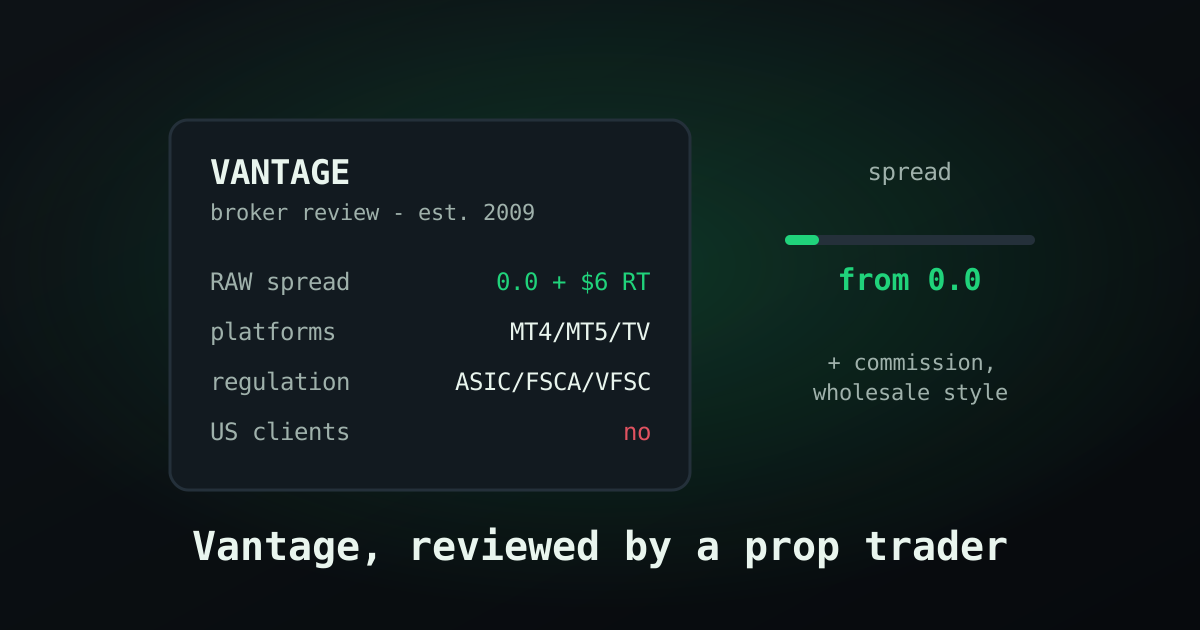
| RAW ECN | from 0.0 | ~$6/lot round turn | anyone trading real volume |
| Pro ECN | from 0.0 | reduced | high-volume, by invitation/size |
The Standard-vs-RAW choice is Costco logic: RAW charges you a membership fee (the commission) and sells at wholesale (raw spread). Trade more than a handful of lots a month and the membership pays for itself immediately. On EURUSD, ~$6 round turn plus a near-zero spread routinely beats a 1-pip all-in spread. I keep RAW and I'd guess most readers of this site should too — you're traders, not tourists.
Platforms: MT4, MT5, TradingView connectivity and their own app. Nothing exotic, everything standard, which is a compliment — broker-proprietary platforms are usually where good setups go to die.
Is Vantage actually safe? Here's my deposit-and-withdrawal record
Paper first: Vantage runs multiple entities — ASIC (Australia), FSCA (South Africa), and offshore arms like VFSC for most international clients. Which entity you sign with determines your formal protections, so check your client agreement. That's true at every multi-entity broker and most reviews stop there, at the paperwork.
Now the part that actually matters day to day: in all my time with them I've had zero funding drama. Deposits land near-instantly — I've gone from "top up" to trading inside a few minutes. Withdrawals have never turned into a support-ticket saga, which is THE thing that separates real brokers from the ones this industry warns you about.
And there's a security detail that deserves more airtime than it gets: Vantage only pays out to accounts in your own name. Sounds bureaucratic, is actually your best protection — even if someone got into your trading account, they can't route your balance to their bank. The money can only ever travel back to you. It's the same reason hotel safes bolt to the wall: not to slow you down, to make the contents worthless to anyone else.
Sponsored
Check Vantage yourself
Spreads, entities and account specs change — verify the current RAW commission and your applicable entity on their site before funding anything.
Visit VantageThe nitpicks, because no broker review without them
- The marketing volume. Expect promo emails and the occasional bonus push. Unsubscribe works fine, I just wish I didn't need it.
- Know your entity. Most international clients sign with the offshore arm — normal industry practice, but read your own agreement so you know what applies to you.
That's genuinely the list. After years of using them my complaints are an inbox filter and a paperwork footnote — from a broker, that's about as good as it gets.
Prop eval or a Vantage account — or both?
Wrong question, honestly. They do different jobs. An eval rents you size for a fee under strict rules; your own account is smaller but rule-free and the money is actually yours on day one. I run both and wrote up the exact split here. If you're purely capital-constrained, start with a cheap eval. If you're rule-constrained — news, weekends, hold time — a RAW account fixes that for the cost of a commission.
Sponsored
Open the account next to your evals
A small RAW account beside your funded accounts covers everything prop rules won't let you do. Deposits land in minutes, withdrawals go only to your own name, and you can start at the minimum and scale when it earns it.
Open a Vantage accountFrequently asked questions
Is Vantage a good broker?
In my experience, yes: RAW pricing (0.0 spreads + ~$6/lot round turn) is genuinely competitive, deposits arrive near-instantly, and withdrawals have never given me trouble in years of use. The company has operated since 2009 on standard MT4/MT5 — no proprietary-platform lock-in.
Is Vantage regulated?
Yes, through multiple entities including ASIC (Australia) and FSCA (South Africa), with most international clients onboarded via its offshore entity. Check your client agreement to see which applies to you.
Are withdrawals from Vantage safe?
Vantage only pays out to bank accounts or cards in your own name. That name-matching rule means that even if your trading login were compromised, funds can't be redirected to someone else — they can only travel back to you. In practice my withdrawals have been quick and fuss-free.
What is the minimum deposit at Vantage?
From $50 on the Standard account; RAW is typically accessible from a few hundred dollars. Start small and scale up once the account has proven itself in your own workflow.
Does Vantage accept US clients?
No. US residents can't open Vantage accounts — futures brokers or prop firm evaluations are the usual alternatives for leveraged trading from the US.
Keep reading
Risk note