Buying Guide
Prop Firm or Your Own Broker Account? I Run Both. Here's the Split.
Some links on this page are affiliate links. We may earn a commission if you sign up through them, at no extra cost to you.
Last year I spent about $600 on eval fees and kept a couple grand at a broker on the side. Friends in both camps think I'm doing it wrong. The prop-only guys call personal accounts "paying full price for risk". The own-account guys call evals "renting permission to trade with a curfew". They're both right, which is the point.
The honest comparison table
| Prop eval | Own broker account | |
|---|---|---|
| Capital needed | $19–$600 fee | whatever you deposit |
| Size you control | $5K–$200K+ | your deposit × leverage |
| Rules | drawdown, news, consistency, min days | none but margin |
| Profits | 70–90% split, payout process | 100%, withdraw anytime |
| Blow-up cost | the fee | the money |
| Psychology | trading not to lose | trading your rent money |
That last row decides more accounts than any spread comparison ever will. On evals, people overtrade to hit targets before the clock runs out. On personal accounts, people cut winners early because it's "real". Pick the poison that fits your flaws — I genuinely mean that. I trade calmer knowing a breach costs a fee, not my savings. Others feel the exact opposite.
The math nobody runs before buying their fourth eval
An eval is a franchise agreement. The firm hands you a big store and a thick rulebook, and takes a cut of sales. Your own account is a market stall: tiny, yours, nobody can revoke it. The franchise wins on revenue as long as you can live with the rulebook. And the rulebook is where they make their money — most buyers breach, which is why the fee model exists at all. Nobody in this industry is your friend; the broker charges you spread either way. Know whose business model you're feeding and feed it on purpose.
- $2K in savings: one $32–$200 eval beats depositing $2K and trading micro lots. If you breach, tuition was cheap. Start here.
- Passed and getting payouts: keep churning evals for size, but park a slice of each payout in a personal account. That's profit becoming property.
- Strategy that props hate (news spikes, weekend gaps, 3-week holds): stop forcing it through eval rules. That's what the personal account is FOR.
Sponsored
The 'everything props ban' account
My personal side runs on a Vantage RAW account — spreads from 0.0 plus ~$6 round turn, no consistency rules, no payout windows, weekend holds welcome. Deposits land in minutes and withdrawals only go to your own name, so start small and build from there.
See Vantage RAWThe split I actually run
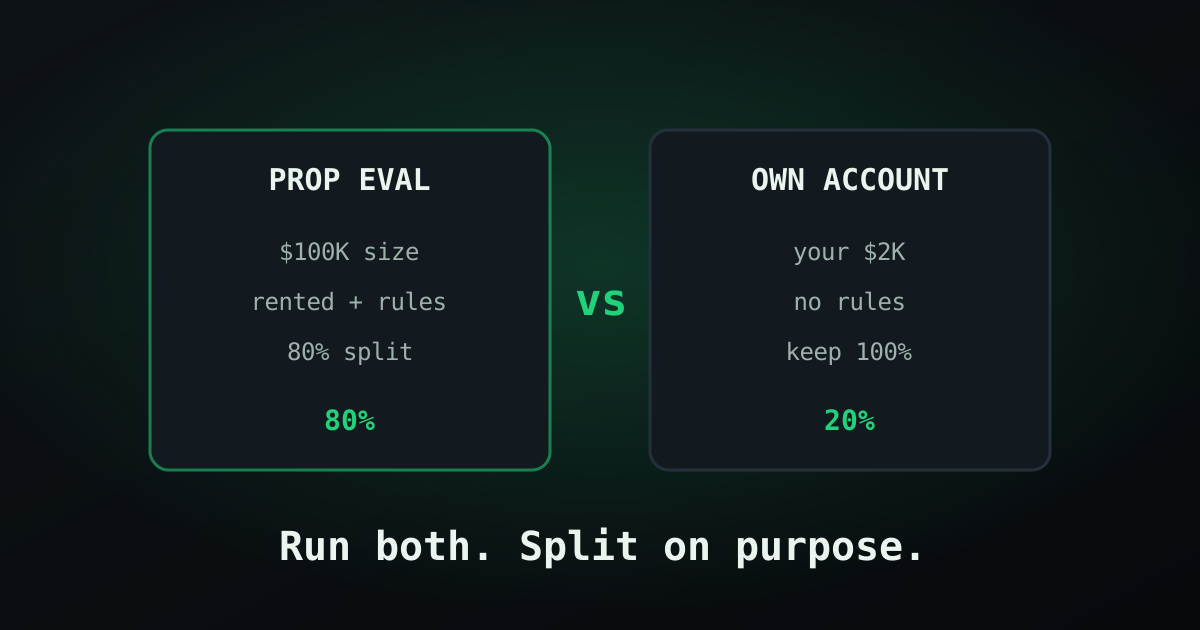
Roughly 80/20. Evals carry the size and the upside; the personal account holds the trades that don't fit prop rules plus a growing slice of payouts. Every payout, something moves from rented capital to owned capital. Boring by design.
One warning from experience: don't run the same fast strategy on both at once while you're learning the rules. I fat-fingered a news trade on the wrong terminal once — fine on my own account, would've nuked the eval. Label your terminals. Loudly.
So which one first?
Small capital: eval first, cheapest tier, treat it as tuition — our verified cheapest list is the honest starting point. Decent capital and a rule-breaking strategy: personal account first, evals when you want size. Everyone else: both, 80/20, adjust as payouts come in. And reread any firm's rules before you buy — they change them more often than they announce them.
Frequently asked questions
Is a prop firm better than trading your own money?
For capital under a few thousand dollars, usually yes: a $32–$200 eval fee controls $5K–$100K of buying power, and a blow-up costs the fee instead of your savings. The trade-off is rules (drawdown, news, consistency) and a profit split.
How much money do you need to skip prop firms entirely?
Enough that meaningful position sizes don't require dangerous leverage — realistically $5K–$10K+ of true risk capital. Below that, evals simply rent more size per dollar.
Can you trade a prop account and a personal account at the same time?
Yes, and many funded traders do. Keep strategies separated per terminal, and check your firm's rules on copy trading between your own accounts — several firms restrict it.
Why do prop firms have so many rules?
Because the evaluation fee is their product. Rules like trailing drawdown and consistency caps exist so most buyers fail while the firms stay profitable. It's not evil, it's the business model — price it into your decision.
Keep reading
Risk note