Trading Basics
What Is a Prop Firm? Funded Trading Explained in Plain English
Some links on this page are affiliate links. We may earn a commission if you sign up through them, at no extra cost to you.
When I first heard "someone will give you $100,000 to trade," I assumed it was a scam. It mostly isn't — but it isn't free money either. Here's exactly what a prop firm is, how funded trading works, and where the catch hides, from someone who has both passed and blown a few of these accounts.
What is a prop firm, exactly?
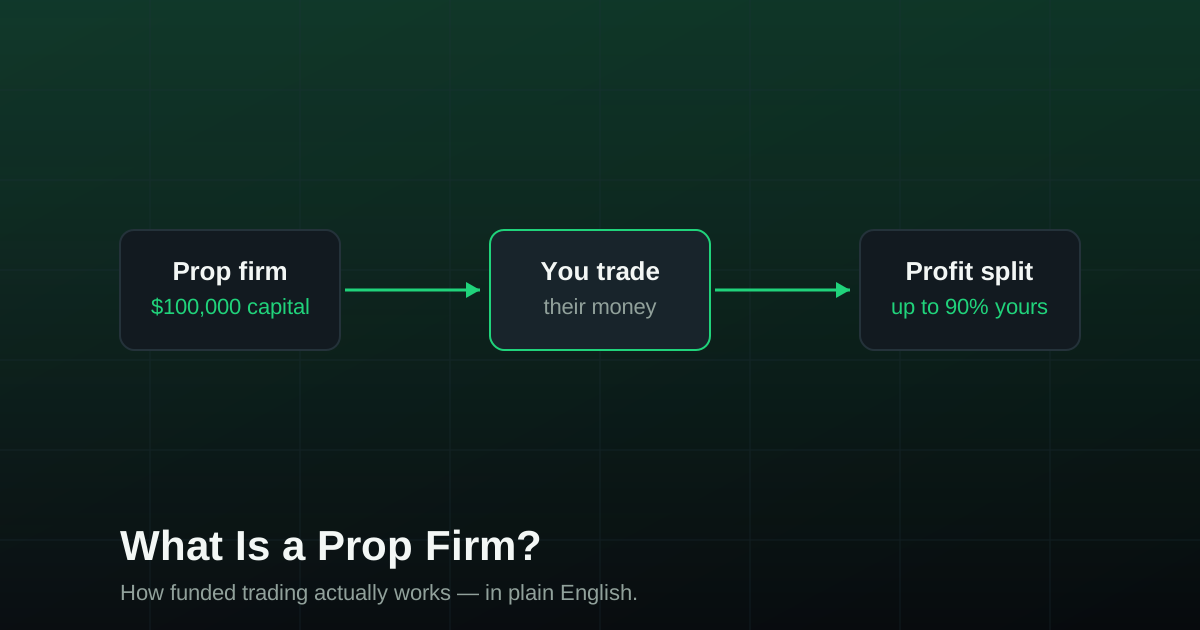
A proprietary trading firm trades its own capital rather than clients' money. Modern online prop firms extend that idea to retail traders: you pass a challenge, they fund you (with real or simulated capital), and you share the profits. In exchange, you follow their risk rules to the letter.
How does a funded account work?
- 1Buy an evaluation — a "challenge" — for a one-off fee based on the account size you want.
- 2Hit a profit target without breaking the daily or maximum drawdown rules.
- 3Get a funded account — sometimes after one phase, sometimes two or three.
- 4Trade it within the rules and request payouts, keeping your profit split.
The fee is your only real downside. Fail and you're out the cost of the challenge — not a $100K account. That asymmetry is the whole appeal: small, fixed risk for access to large capital.
What's the catch?
The catch isn't hidden — it's in the rulebook, and most traders fail on the rules rather than the target. Watch for:
- Drawdown limits — daily and maximum loss caps that end the account if breached.
- Consistency rules — caps on how much of your profit can come from one big day.
- News and EA restrictions — some firms limit trading around high-impact news or ban bots.
- Minimum trading days and payout terms that decide when you actually get paid.
Are prop firms legit?
Some are excellent and have paid out for years; others have collapsed and taken traders' money with them. It's a real question with a real answer — we cover the warning signs in detail in our guide on whether prop firms are legit.
How much does it cost to start?
Less than most people expect. Small accounts often start around $30–$60, scaling up with account size. If you're price-sensitive, start with the cheapest prop firm challenges and treat the first one as tuition.
Sponsored
Starting your first challenge?
If you're new, a low-cost, well-documented firm keeps the lesson cheap. FundingPips is a popular, affordable CFD option to compare first — confirm the current rules and pricing on its page before buying.
See FundingPipsIs prop firm trading worth it?
For a disciplined trader without much capital, yes — it's leverage on your skill instead of your savings. For someone hoping to get rich on a coin flip, the rules will find you out fast. Run a challenge through our challenge risk calculator to see whether the target is realistic for your style before you buy.
Final thoughts
A prop firm is simple at heart: prove you can trade, use their money, share the profit. The skill isn't just hitting the target — it's respecting the rules long enough to get paid more than once. Understand the model, pick a firm whose rules fit how you actually trade, and treat the challenge fee as the cost of finding out.
Frequently asked questions
What is a prop firm in simple terms?
A proprietary trading firm that lets you trade its capital. You pass an evaluation, earn a funded account, follow the firm's risk rules, and keep most of the profit — often 80–90%.
What is a funded trading account?
An account funded with the prop firm's money (real or simulated) that you earn by passing a challenge. You trade it within the rules and withdraw your share of the profits.
Do you trade real money at a prop firm?
It varies. Some firms place your trades in live markets; many use simulated capital and pay real profit splits from their own funds. Either way, your payouts are real money.
Is prop firm trading worth it?
For a disciplined trader with limited capital it can be — you risk a small fee instead of a large account. The risk rules are strict, so success depends on discipline more than a big profit target.
Keep reading
Risk note