Prop Firm Rules
Does Trailing Drawdown Ever Go Away? A Trader's Honest Guide
Some links on this page are affiliate links. We may earn a commission if you sign up through them, at no extra cost to you.
I lost my first funded account to trailing drawdown without ever having a losing day. I was up, gave a chunk back on one trade, and the account breached — because the limit had quietly followed my balance up and was now sitting right under my feet. If you've ever stared at your platform wondering why your "max loss" moved, this one's for you.
What is trailing drawdown?
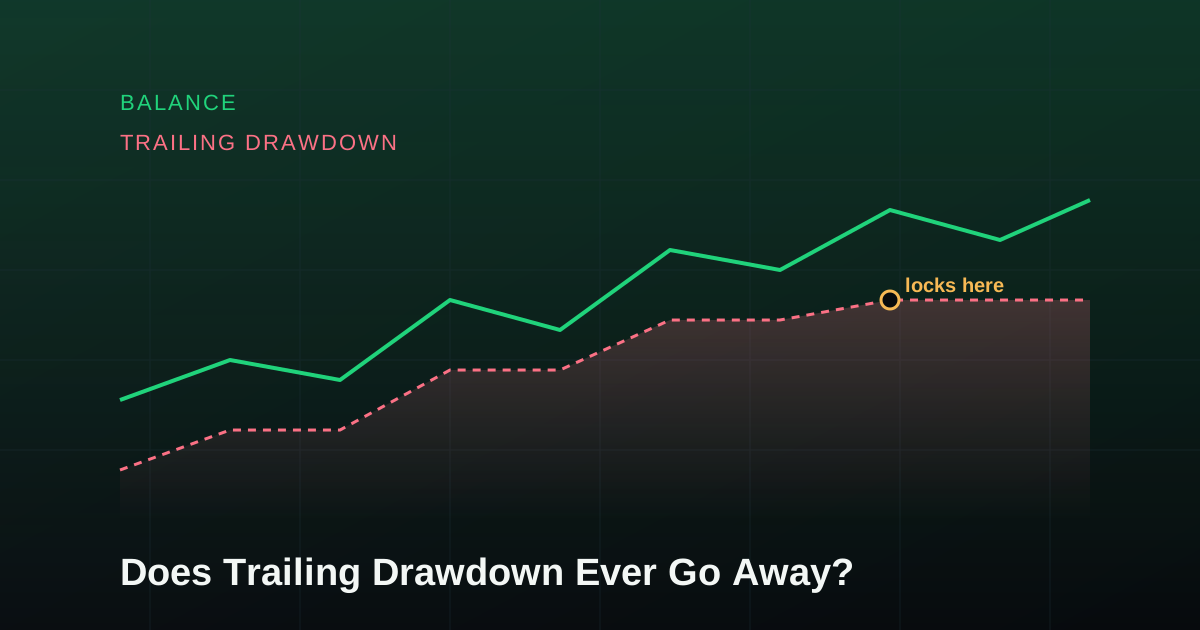
A trailing (or "trailing max") drawdown is a maximum-loss limit that moves up as your account makes new highs. Make $1,000 and the breach level rises by roughly $1,000 too. The good news is your buffer grows with your wins. The bad news is that giving profits back can breach you even when you're still in profit overall.
Static vs trailing vs end-of-day drawdown
| Drawdown type | How it behaves | What it means for you |
|---|---|---|
| Static | Fixed at a set level from day one | Simplest — your loss limit never moves |
| Trailing (intraday) | Follows your highest equity, tick by tick | An open winner that pulls back can move the limit against you |
| Trailing (end-of-day) | Updates only on the daily close | Open profits don't tighten it intraday — more forgiving |
| Trail-then-lock | Trails until a lock point, then fixes | Tight early, relaxed once you're ahead |
When does trailing drawdown stop trailing?
This is the part nobody reads until it's too late. The common rule: the trailing limit climbs with your balance until you've banked the first profit target, then it locks — usually at your original starting balance. From that point you can't lose more than your initial deposit's worth, and your earlier profit is protected. But the exact lock point varies, and a few firms trail forever, so the rulebook is the only source of truth.
How to survive trailing drawdown
- 1Trade smaller early. Your buffer is thinnest before the limit locks.
- 2Bank partials. Taking profit off the table is also what nudges the trailing line up.
- 3Know your number in dollars — run it through our drawdown calculator so the limit isn't a mystery.
- 4Avoid round-tripping a big open winner; on intraday-trailing firms that giveback is what breaches accounts.
- 5If trailing drawdown keeps catching you, compare firms with static or end-of-day rules instead.
Sponsored
Where I'd start the comparison
After that breach I stuck to firms with clear, well-documented drawdown rules. FundingPips is a popular, low-cost CFD option to line up first — just confirm the exact drawdown type on its page before you buy.
See FundingPipsSo, does it ever really go away?
On most firms, yes — once you're far enough ahead the trailing limit locks and stops chasing you. Trailing drawdown isn't evil; it actually hands you a growing cushion once you're winning. It just punishes round-trips harder than a static limit does. Respect it early, lock in profit, and it stops being the thing that ends your account. Want a firm whose rules fit your style? Compare them side by side in our prop firm comparison.
Frequently asked questions
Does trailing drawdown ever go away?
On many firms, yes — it stops trailing once your balance reaches the starting balance plus the first profit target, then locks, usually at your initial balance. Some firms only trail to break-even, and a few never stop, so always check the specific rule.
What's the difference between static and trailing drawdown?
A static drawdown is fixed from day one and never moves. A trailing drawdown rises with your account's highs, so it can move against you when you give profits back.
Is trailing or end-of-day drawdown better?
End-of-day trailing is usually more forgiving because it only updates on the daily close, so your open profits don't tighten the limit intraday. Pure intraday trailing is the strictest.
How do I avoid breaching trailing drawdown?
Trade small while your buffer is thin, bank partial profits, avoid round-tripping big open winners, and know your loss limit in dollars before you start.
Keep reading
Risk note