Strategy
Intraday vs End-of-Day Trading: Which Is Actually Better?
Some links on this page are affiliate links. We may earn a commission if you sign up through them, at no extra cost to you.
I spent two years convinced I was a day trader because that's what the internet sold me. Turns out my best results came from a handful of end-of-day trades I almost didn't take. If you're torn between staring at 5-minute charts all day and checking the market once in the evening, here's the honest comparison.
What is intraday trading?
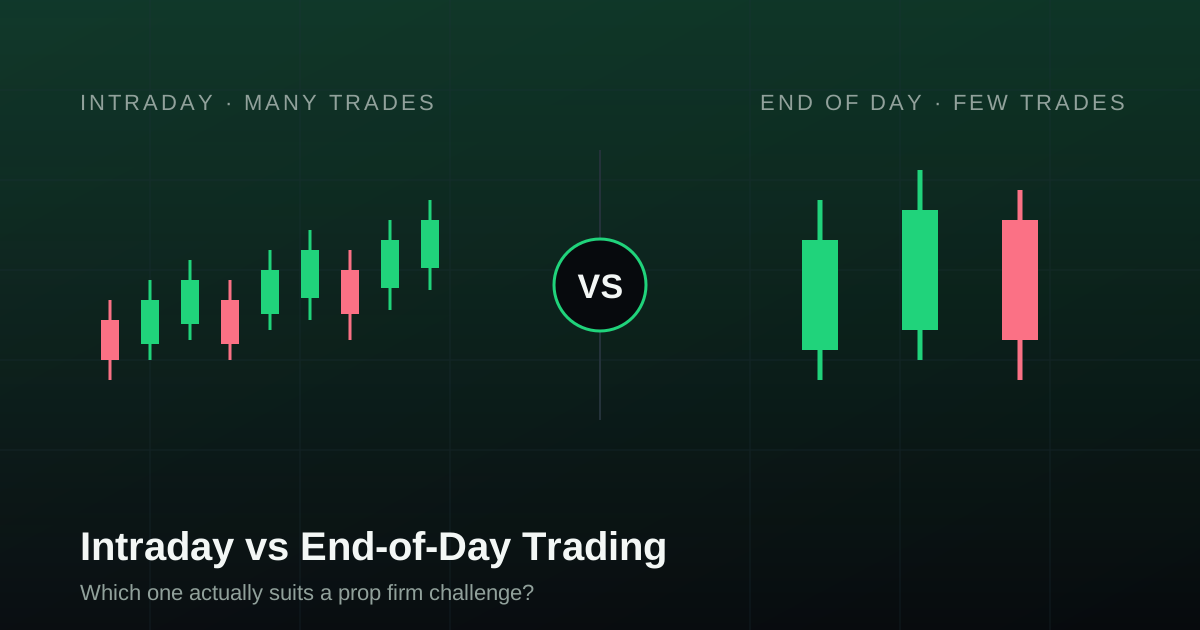
Intraday (or day) trading means every position is opened and closed before the session ends — nothing is held overnight. It lives on lower timeframes, reacts to news and momentum, and rewards quick, repeatable decisions. It also asks for your attention during market hours, which is the part nobody mentions on YouTube.
What is end-of-day trading?
End-of-day trading means you analyse the market around the daily close and place trades you may hold for days or weeks. Fewer decisions, less screen time, bigger-picture moves. The trade-off is overnight and weekend gap risk, and stops that are wider in dollar terms.
Intraday vs end-of-day: the honest comparison
| Factor | Intraday | End-of-day |
|---|---|---|
| Screen time | High — during the session | Low — minutes a day |
| Trade frequency | Many | Few |
| Overnight risk | None | Yes (gaps) |
| Typical stress | Higher | Lower |
| Stop size | Smaller | Larger |
| Best suits | Scalpers, news traders | Swing traders, busy people |
Which is better for a prop firm challenge?
It depends on the firm's rules as much as your style. End-of-day and swing approaches mean holding overnight and over the weekend — and not every prop firm allows that. Intraday approaches collide more often with news-trading restrictions. Check both before you buy: you can filter for weekend holding and news rules in our prop firm comparison.
Sponsored
Trade on your own schedule?
If end-of-day or swing trading fits your life, you need a firm that allows overnight and weekend holds without a rushed time limit. The5ers is a popular pick for exactly that — check the current rules before you buy.
See The5ersHow I figured out which one I am
I tracked every trade for three months and split the results by how long I held. The intraday trades broke even and aged me; the end-of-day trades quietly did the work. The lesson wasn't "EOD is better" — it was "be honest about your schedule and temperament," not what looks exciting on a livestream.
Final thoughts
Intraday and end-of-day aren't rivals, they're tools for different lives. Pick the one you can actually execute calmly five days a week, then pick a prop firm whose rules let you trade that way. Forcing a day-trading style onto an evening-only schedule is how good traders end up failing on stress, not strategy.
Frequently asked questions
Is intraday trading or end-of-day trading better?
Neither is universally better. Intraday suits people with screen time who like fast decisions; end-of-day suits patient traders or those with day jobs who can only check the market once a day.
Is end-of-day trading less risky?
It removes the stress of intraday noise but adds overnight and weekend gap risk, and position sizes are usually larger — so risk per trade still has to be managed carefully.
Can I do end-of-day trading at a prop firm?
Yes, but only at firms that allow holding positions overnight and over the weekend. Always check the weekend-holding rule before buying a challenge.
Which is better for beginners?
Many beginners do better with end-of-day or swing trading because it removes time pressure and the temptation to overtrade — but it requires patience and wider stops.
Keep reading
Risk note